Pulsar · Hackathon Winner
University social web app built at JeMore with team HyperLabs.
The story
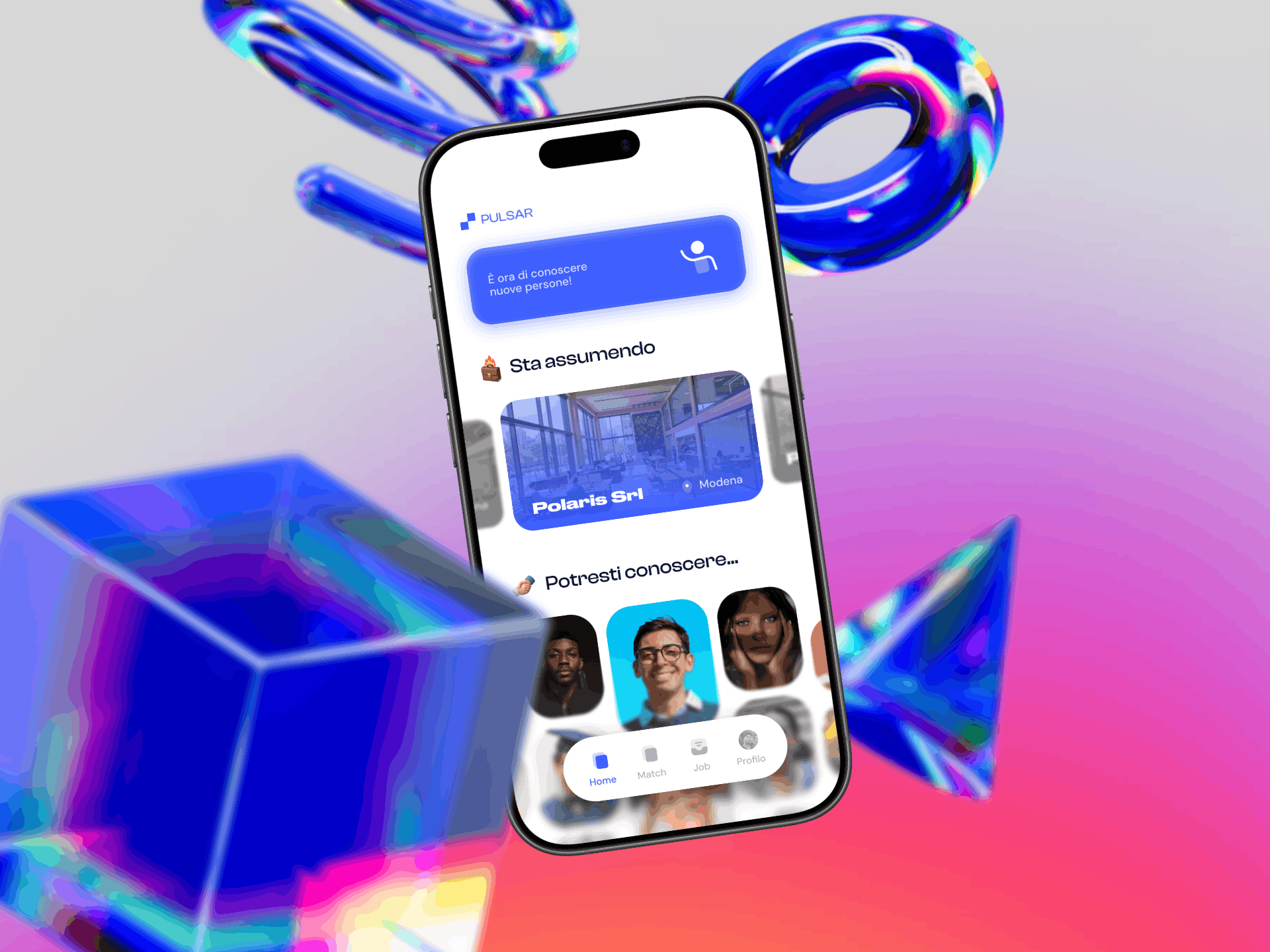
Every day at university you are surrounded by hundreds of people, and you know almost none of them, not as friends and not as future colleagues. Pulsar is our answer: a web app for students that sits between Tinder and LinkedIn, to meet people for friendship and for work. We built it in one day at the JeMore hackathon, five of us as team HyperLabs, and it won first place.
- people in the team
- 5
- commits on the day, from 9:21 to 17:28
- 40
- screens built after two in the afternoon
- 6
An hour without code
When the hackathon started, almost every team opened an editor and started writing code. We didn't write a line. We spent the first hour, a whole hour, just talking: what the problem really was, who it was for, what we could show at the end of the day.
It felt like losing time while everyone else was building. It was the opposite. Once the idea was precise, nobody had to guess what to do, and five people could work at once without stepping on each other.
- 1
The idea
All five of us, the first hour, no laptops: the problem, the people, the one thing to show at the end.
- 2
The data
Two teammates and I worked out the architecture and the stack, and before anything else the database: what a student is, what a skill is, how two people are connected.
- 3
The product
Meanwhile the other two teammates went through everything around it: product-market fit, feasibility, how it could make money.
- 4
The design
Our designer moved to Figma. As soon as the first sketches were ready, the frontend had something real to follow.
- 5
The app
I left the backend to the other two and moved to the frontend full time: setting up the app, wiring everything together, and telling the others what came next.
The day in commits
The repository tells the same story. The morning is data: the European skills taxonomy and the database schema. From 13:54 it is the app, screen after screen, as fast as the designs arrived.
- 09:002
- 10:003
- 11:001
- 12:000
- 13:002
- 14:005
- 15:006
- 16:0012
- 17:009
What we built
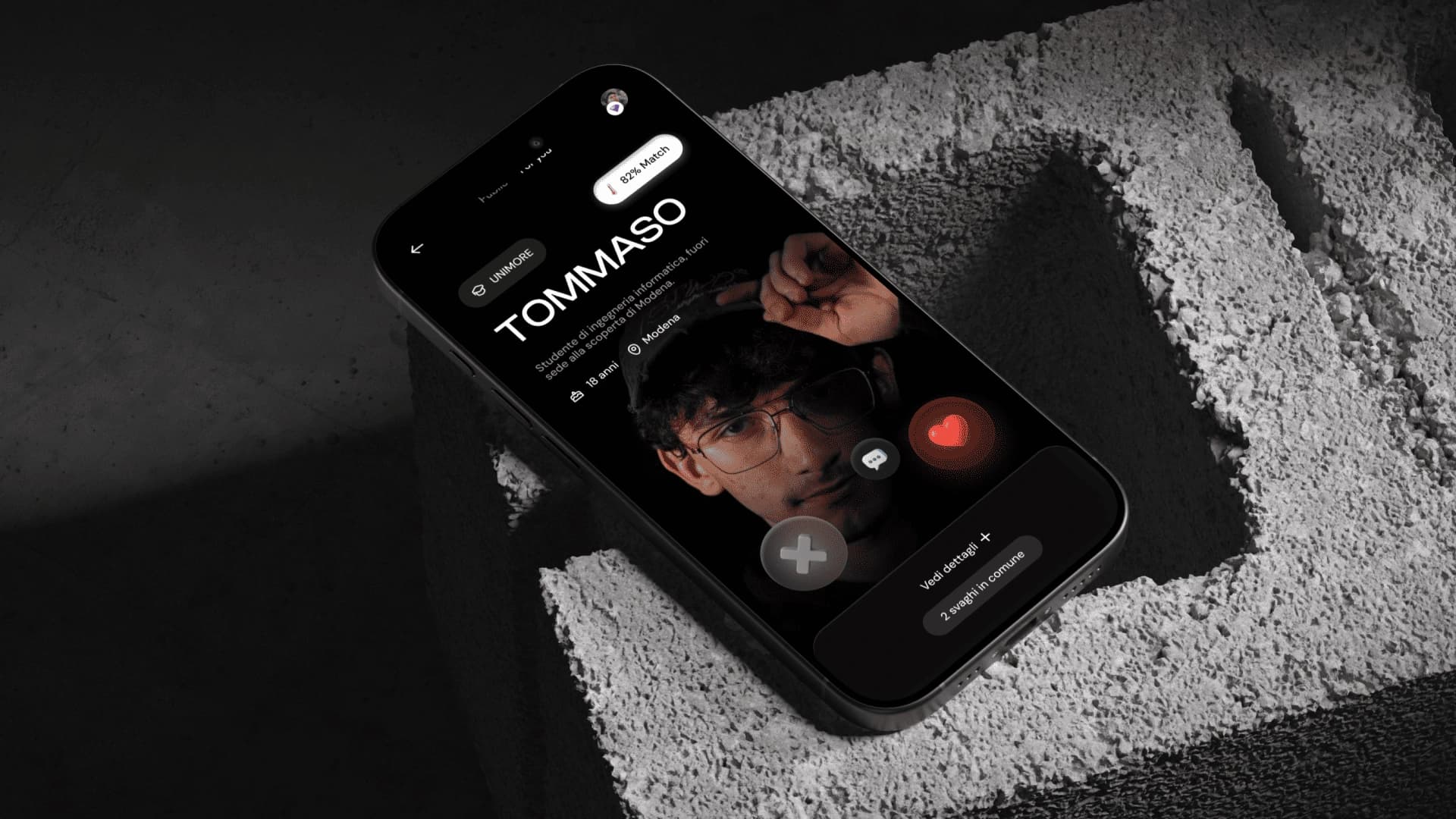
You sign up and an onboarding asks who you are, step by step: your name, your age, your university, your field and your skills. Then your profile grows with what does not fit in a CV: your attitudes, the topics you care about, the places you go, your best work, and your CV too if you want.
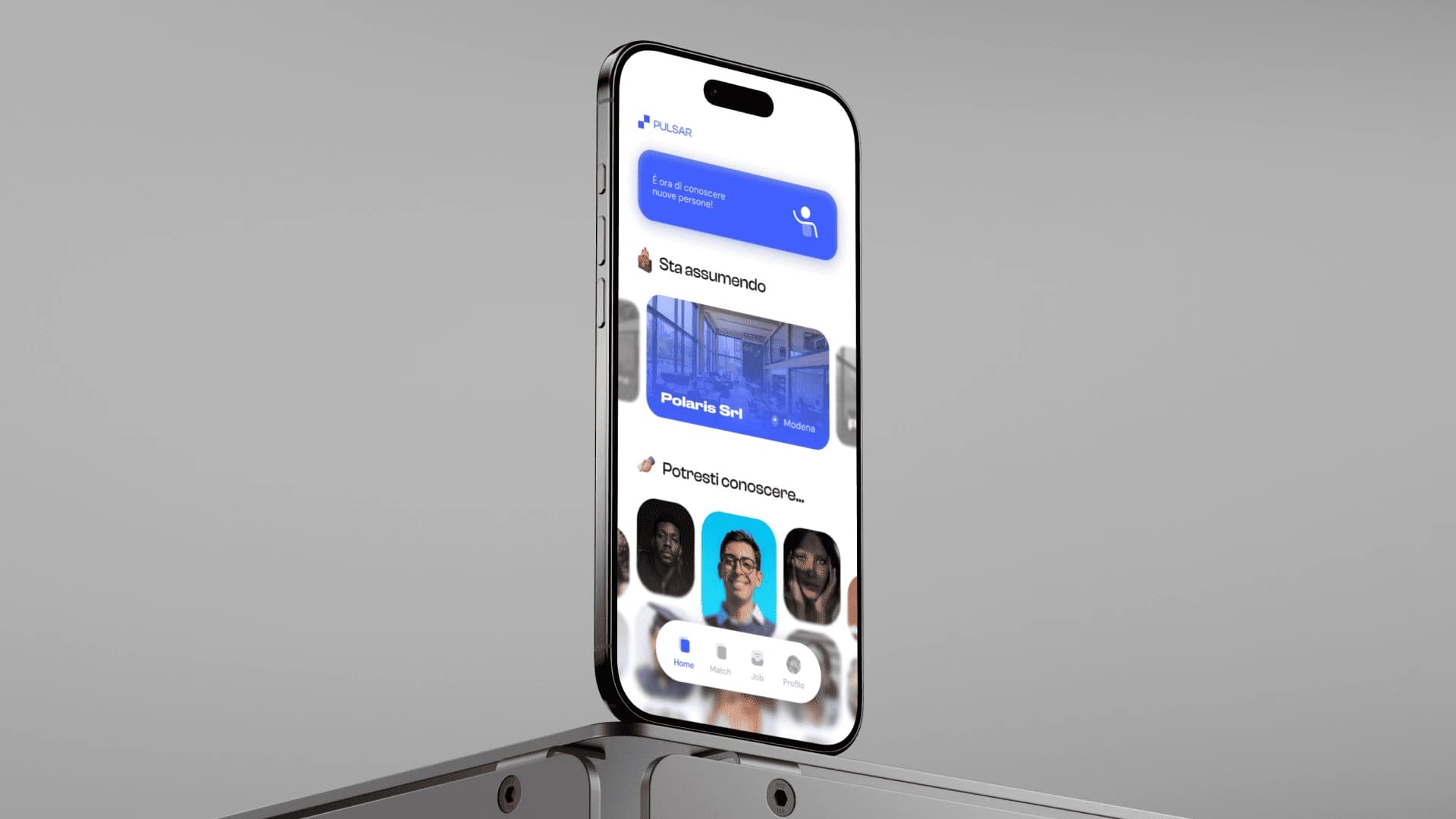
The home mixes people and companies. Matching is a swipe, on real profiles from the database, and a match opens a chat. A jobs page closes the loop between meeting people and finding work.
Skills that mean the same thing for everyone
Matching on skills only works if two people who know the same thing write it the same way. So skills are not a free text box: the morning went into ESCO, the European Commission's classification of skills and occupations, and in the app you search a list of skills grouped into categories.
The data lives in Postgres on Neon, with Neon Auth for accounts. Who you see next comes from the matching service my two teammates built on the backend; the app asks it for the next person and fills in the profile around it.
The pitch
When the design was done, our designer moved to the presentation with our marketing teammate. A working app is only half of a hackathon; the other half is making a jury understand in a few minutes why it matters. Their presentation did that, and it is a big part of why we won.
Gallery
Want something like this?
I can build the same thing for your product.
Tell me what you have in mind. You get an answer the same day, with a realistic scope and timeline, not a sales pitch.